

It is one of the most common things people say when they come in feeling unwell: “My doctor says everything is normal, but I don’t feel normal.”
In many cases, they have already had extensive testing. Iron levels checked. Thyroid checked. Vitamin D checked. They have been reassured that nothing significant was found. Yet the fatigue remains, along with poor concentration, low motivation, or simply a sense that they are not functioning at the level they once did.
Fatigue is rarely as straightforward as people would like it to be. Normal blood test results do not always mean that every possible contributor to a person’s symptoms has been explored.
When Lab Results Do Not Tell the Whole Story
Conventional laboratory testing is an essential part of healthcare. It can identify many important medical conditions and should never be skipped or dismissed. But there are times when people continue to feel unwell despite reassuring results.
In these situations, it often helps to take a broader view. Beyond the numbers, there are questions worth asking: How is this person sleeping? What does their day actually look like? Are they constantly moving from one responsibility to another with little time to recover?
Depending on a person’s history and circumstances, other factors may also be worth exploring: gut health, chronic low-grade infections, environmental exposures, or stress patterns that have become so familiar they no longer register as stress at all.
This does not mean that every person with fatigue has an underlying condition waiting to be uncovered. It means that health is often more complex than a single blood test can reveal.
The Fatigue That Starts to Feel Normal
One of the most overlooked aspects of chronic tiredness is how gradually it sets in. Many people have slowly adjusted to a level of exhaustion that should not be considered normal.
They wake up tired. They rely on caffeine to get through the morning. They push through the afternoon. They collapse at night, only to repeat the same cycle the next day. After months or years of this, it begins to feel ordinary and may become their health baseline.
But feeling this way consistently is not simply an inevitable part of modern life. It is often a signal that something, whether nutritional, hormonal, environmental, or lifestyle-related, deserves closer attention.
What Blood Tests Can and Cannot Tell You
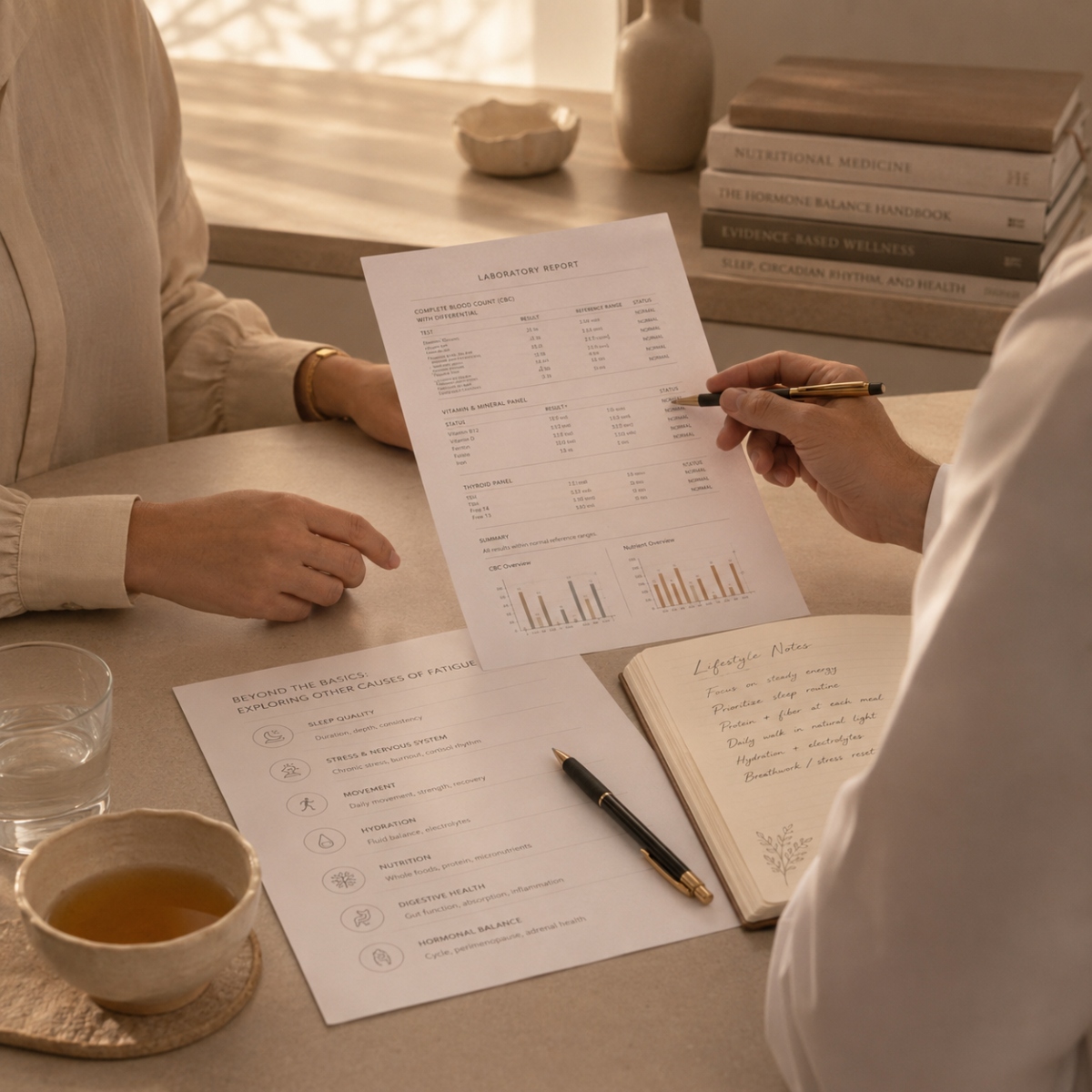
Standard blood panels are designed to detect deficiencies and medical conditions that fall outside a defined reference range. They are a valuable and necessary tool. But the absence of an abnormal result is not the same as an explanation for how someone feels.
There are several areas that conventional testing does not always capture in full:
- Sleep quality – a person can sleep eight hours and still wake up exhausted if the quality of that sleep is poor
- Chronic stress – sustained pressure over time affects energy, cognition, and mood in ways that do not always show up in routine results
- Nutritional gaps – some deficiencies can sit within the lower end of the normal range, yet still affect how a person functions day to day
- Gut health – digestion and nutrient absorption can influence energy levels in ways that are not routinely screened
- Cumulative lifestyle load – the effect of months or years of poor recovery, high output, and insufficient rest
- Mold and hidden viruses– which are only starting to gain traction due to awareness
Fatigue Is Rarely One Thing
Perhaps the most important shift in thinking about fatigue is moving away from the idea that there is always a single cause waiting to be discovered.
More often, persistent tiredness reflects the cumulative effect of how we have been living, sometimes for months, sometimes for years. Improving energy in these cases may require more than correcting a single laboratory value. It may require an honest look at the pace of daily life, the quality of sleep, the consistency of meals, and the time given to genuine recovery. Sometimes it also requires asking questions that have not yet been asked.
What Feeling Well Actually Looks Like
Many people have forgotten what it feels like to feel well, or healthy. True health can look like steadiness of energy across the day, the ability to think clearly, resilience under pressure, quality of sleep, quality of friends, and the capacity to engage fully and to mostly enjoy everyday life. Feeling well and being told that you are well are not always the same thing. Blood tests provide valuable information, but they are only one part of a much larger story. If you feel “off” and have been given the all clear, it’s time to look more deeply into your lifestyle habits and perhaps consider seeing a functional medicine practitioner.









Add comment