
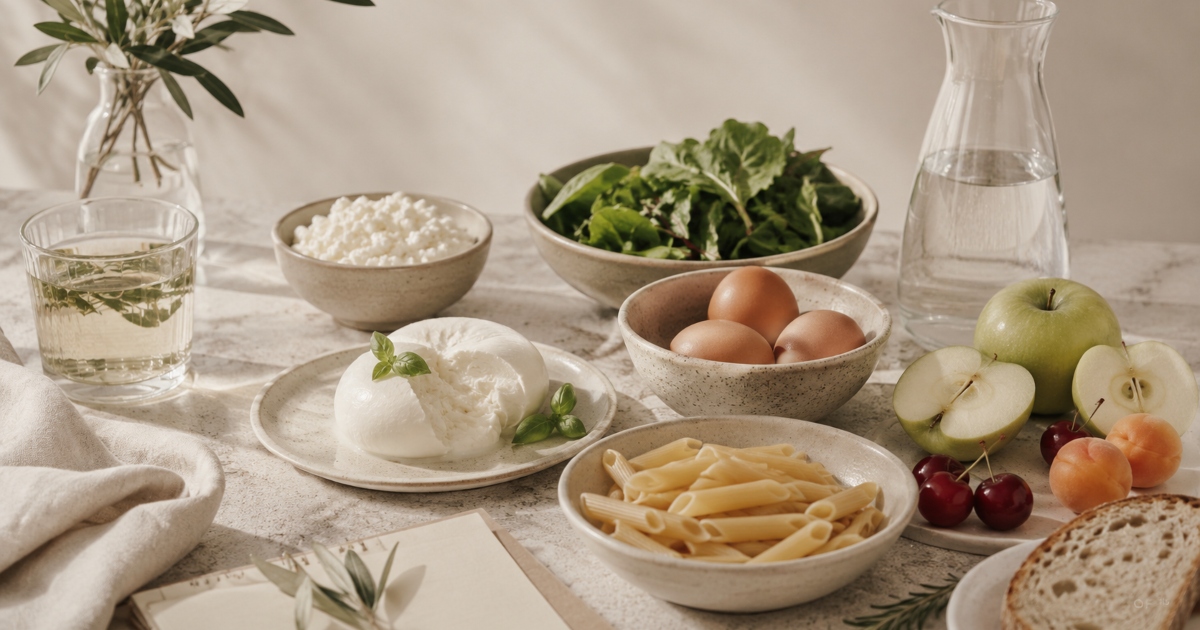
Before my visit to the migraine specialist in Washington, DC, I had never heard of a low-tyramine diet. After years of scans, appointments, and searching for answers, I was given a surprisingly simple recommendation: try reducing foods that are naturally high in tyramine.
Tyramine is a compound found in certain foods, particularly those that are aged, fermented, cured, or stored for longer periods. It is not something intentionally added to food. Instead, tyramine is produced through the natural breakdown of the amino acid tyrosine, and its levels rise as foods age, ferment, or simply sit in the refrigerator for too long. The idea behind the diet is not that these foods are “bad.” In fact, many of them can be part of a healthy diet. However, in some individuals, they may act as migraine triggers. For me, following a low-tyramine diet was the first intervention that made a noticeable difference.
Within a couple of months, I experienced something I hadn’t felt in years: freedom from migraines. That experience was one of the first clues that food could influence how we feel far more than I had ever imagined.
What does a low-tyramine diet actually look like?
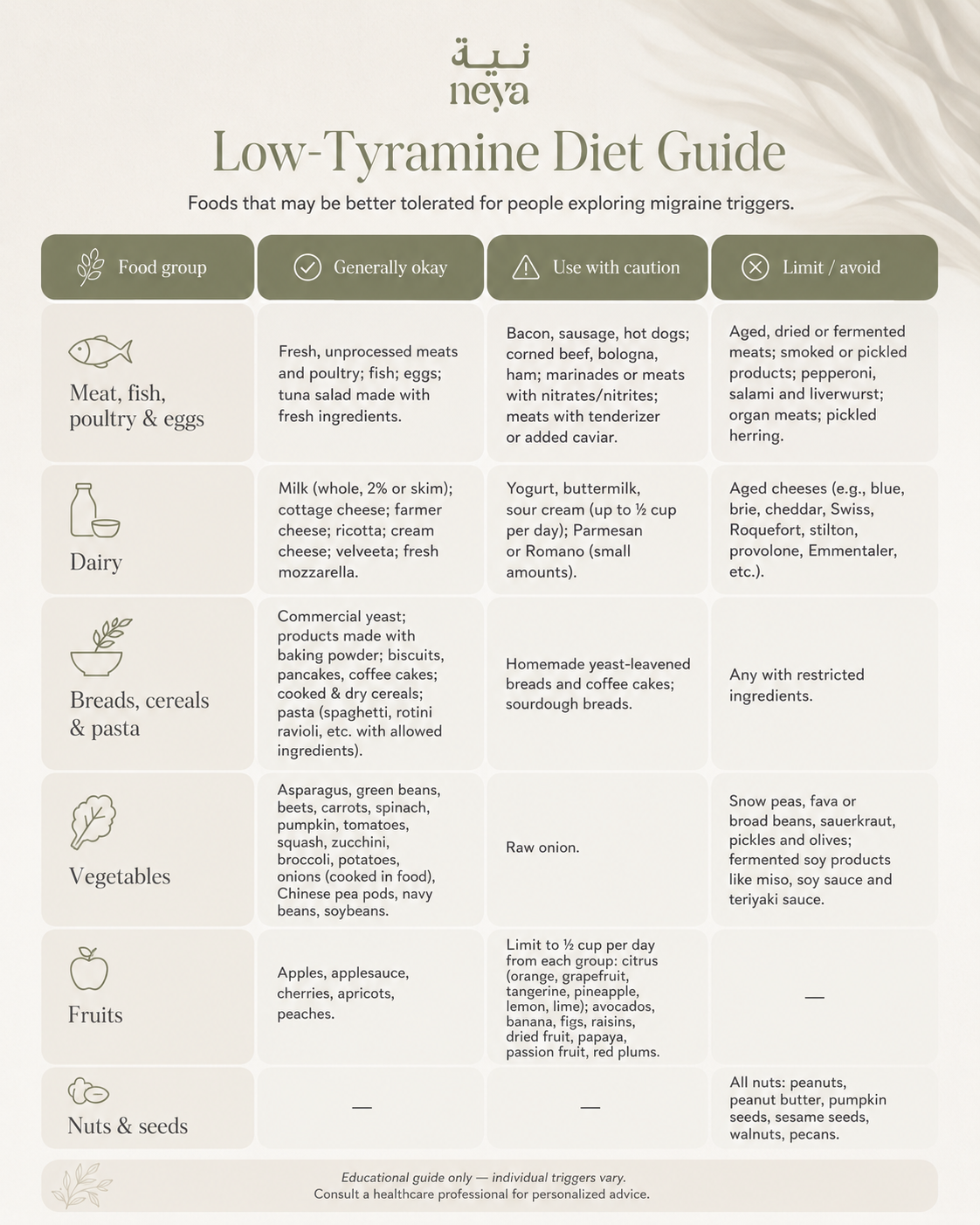
The diet is not about eliminating entire food groups. It is about being more intentional with what you eat and how fresh it is. Some foods are considered safe to eat freely. Others may be consumed in small amounts with some caution. And a third category is best avoided altogether, at least during the period when you are identifying your triggers.
For proteins, freshly purchased and cooked meats, poultry, fish, and eggs are generally fine. The ones to avoid are the processed, cured, or fermented varieties: Pepperoni, salami, and any luncheon meats with added nitrates or nitrites. Sausage and hot dogs fall somewhere in between, so they’re best approached with caution rather than eaten freely.
In the dairy category, most fresh cheeses are considered safe, including cottage cheese, ricotta, cream cheese, American cheese, and fresh mozzarella. The ones to steer clear of are the aged varieties: blue cheese, brie, cheddar, Swiss, provolone, Roquefort, and Emmentaler, among others. Yogurt, buttermilk, and sour cream are usually tolerated in small amounts, around half a cup per day.
Breads, cereals, and pasta are generally well-tolerated when made with standard ingredients. Sourdough bread and homemade yeast-leavened baked goods fall into the caution category, while anything prepared with a restricted ingredient should be avoided.
With vegetables, the list of what you can eat freely is long: asparagus, broccoli, spinach, carrots, beets, squash, zucchini, potatoes, tomatoes, and most common vegetables. The ones to skip are fermented or pickled preparations, fava beans, snow peas, sauerkraut, pickles, olives, and fermented soy products like miso, soy sauce, and teriyaki sauce.
Fruits like apples, cherries, apricots, and peaches are considered safe. Citrus fruits, bananas, avocados, figs, raisins, dried fruits, papaya, and passion fruit may be tolerated in limited amounts but should be monitored.
What about beverages?
This was one of the areas I had not expected to matter so much. Decaffeinated coffee, caffeine-free sodas, fruit juices, and club soda are generally fine. Caffeinated beverages should be limited to no more than 2 servings per day, including coffee, tea, hot cocoa, and caffeinated sodas.
Reading food labels
One of the more practical habits the diet encouraged in me was reading ingredient labels more carefully. Several additives are known to be problematic for people sensitive to tyramine or other compounds that can trigger migraines. MSG in large quantities, nitrates, nitrites, hydrolyzed or autolyzed yeast, meat extracts, and meat tenderizers containing papain or bromelain are among the ingredients to watch for in packaged foods.
A few everyday habits that helped
Beyond the specific foods, the general approach to eating also matters. Eating three balanced meals a day, with a small snack at night, tends to be more manageable than going long stretches without food. Avoiding high-sugar foods on an empty stomach is also recommended, since blood sugar fluctuations can be a headache trigger on their own. Leftovers are worth being mindful of, too. High-protein foods in particular should ideally be eaten fresh, and anything kept in the refrigerator for more than a day or two is better frozen if it will not be eaten soon.
Is this diet right for everyone?
Not necessarily, and that is an important point. Each person’s sensitivity to tyramine and other compounds is different. The diet is not meant to be a permanent restriction for everyone who tries it, but rather a tool for identifying whether food is playing a role in migraine frequency. Some people find significant relief. Others discover that their triggers lie elsewhere entirely.
Below are some examples of foods that are typically higher in tyramine and may be worth exploring with a healthcare professional if migraines are a recurring issue.








Add comment