

Vitamin D is one of the most commonly recommended supplements in the Gulf, and for good reason. Despite year-round sunshine, vitamin D deficiency and insufficiency remain widespread across the UAE, Saudi Arabia, and the broader GCC region.
Indoor lifestyles, long working hours, air-conditioned environments, sun avoidance during peak heat, and limited time outdoors all reduce natural vitamin D synthesis, even in one of the sunniest regions in the world.
What many people do not realise is that vitamin D rarely works alone. To be fully effective, it works in partnership with vitamin K2, and not all forms of K2 deliver the same results.
What Does Vitamin D Actually Do?
Vitamin D helps the body absorb calcium, which is essential for bone health, immune function, mood, and a healthy inflammatory response. But absorption is only part of the process.
The body also needs to use calcium properly, directing it to bones rather than soft tissue. That is where vitamin K2 becomes essential, and where the choice between MK-4 and MK-7 starts to matter.
MK-7 vs MK-4: What Is the Difference?
Both MK-4 and MK-7 are forms of vitamin K2. They support the same core function: helping the body use calcium effectively. The key difference is how long each form remains active in the body.
| Feature | MK-4 | MK-7 |
|---|---|---|
| Half-life in the body | Short (hours) | Long (days) |
| Suitable for once-daily use | Less ideal | Yes |
| Used in premium formulas | Less common | Widely used |
| Practitioner recommended | Sometimes | Frequently |
| Research volume | Moderate | Extensive |
MK-7 remains active in the body significantly longer than MK-4, providing more consistent support from a single daily dose. For this reason, it is the form most commonly found in premium and practitioner-developed vitamin D3 + K2 supplements.

Why NEYA Uses MK-7
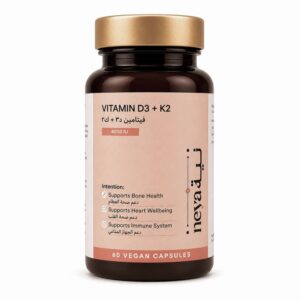
When formulating our Vitamin D3 + K2 supplement, we chose MK-7 because it is the more practical and evidence-supported form for daily use.
- It is one of the most studied forms of vitamin K2
- It remains active in the body longer than MK-4
- It works alongside vitamin D3 to support calcium metabolism
- It is the form trusted by healthcare practitioners and nutrition professionals
Every ingredient in our formula serves a clear purpose, not a marketing one.
Why 4000 IU of Vitamin D3?
We formulated with 4000 IU of vitamin D3 per capsule with the GCC in mind.
Individual needs vary, and testing remains the most accurate way to know your levels. However, given how prevalent vitamin D deficiency and insufficiency are across the region, even among people who spend time outdoors, we wanted to offer a meaningful daily amount for those who may not be getting enough through sunlight alone.
4000 IU is a dosage commonly used in clinical practice and widely referenced in nutritional guidelines for individuals with low or insufficient vitamin D levels.
Vitamin D3 and K2: Better Together
Together, vitamin D3 and vitamin K2 as MK-7 support:
- Bone density – directing calcium where the body needs it most
- Cardiovascular health – helping prevent improper calcium buildup in soft tissue
- Immune balance – a key role of vitamin D year-round
- Mood and overall wellbeing – particularly relevant for those with low vitamin D levels
A Formula Built for the Gulf
Most supplements are not formulated with the realities of GCC living in mind. NEYA’s Vitamin D3 + K2 was.
By combining 4000 IU of vitamin D3 with MK-7, the longer-acting form of K2, we created a simple, once-daily supplement for people who want intentional, evidence-based support without unnecessary complexity.
Best taken with a meal containing healthy fats, as vitamin D3 is fat-soluble and absorbs more effectively alongside dietary fat.
Our products are designed to support general wellness and are not intended to diagnose, treat, cure, or prevent any disease. Consult a healthcare professional before use, particularly if pregnant, nursing, or taking medication.








Add comment